

It’s a familiar scenario across countless organizations: a critical position opens up, and the first instinct is to search the external market. Meanwhile, somewhere within the company, an employee already has the potential to succeed in that role. The problem is that no one knows it—not their manager, not the Human Resources team, and not even the employee themselves.
It’s a familiar scenario across countless organizations: a critical position opens up, and the first instinct is to search the external market. Meanwhile, somewhere within the company, an employee already has the potential to succeed in that role. The problem is that no one knows it—not their manager, not the Human Resources team, and not even the employee themselves.
A McKinsey study found that 87% of executives are already experiencing—or expect to experience—a skills gap in the coming years. Despite this, many organizations continue to rely on the same solution: trying to “buy” talent from the outside instead of developing it from within.
The Hidden Cost of Overlooking Internal Talent
Hiring externally comes with a significant hidden cost. Every time a new employee joins the organization, the company invests a substantial amount of time and resources just to support onboarding and help the individual reach full productivity.
For its part, Gartner identified a striking trend: although organizations are investing more than ever in internal mobility, internal mobility rates are not increasing. The problem is not a lack of budget; the problem is that internal talent remains invisible to those making decisions.
Why does this happen? Primarily because of the tools we use to make talent decisions. An internal résumé or a traditional performance review only reflects what a person has already done—not what they are capable of achieving. When we promote only those with identical prior experience in a role, we overlook people who simply need the opportunity to demonstrate their potential.
What truly predicts potential is a person’s behavioral profile: their adaptability to change, learning agility, and emerging leadership style. Unfortunately, these are the very insights that rarely appear in traditional HR spreadsheets or talent records.
From Hunting for Talent to Building It
As SAP SuccessFactors points out, the sustainable path for organizations is not to keep hunting for talent in an increasingly competitive market, but to build it from within by anticipating the skills and capabilities the business will need over the next three to five years.
To achieve this, People Management teams must be able to answer three key questions using objective data rather than instinct or intuition:
- Who has the genuine potential to succeed in this role, beyond their linear career path?
- Who has the true potential to succeed in this role, beyond their linear career path?
- How can we provide managers with an objective framework to support their team’s growth, instead of reactively trying to “retain” talent?
Behavioral Data: The Map to Unlock Internal Potential
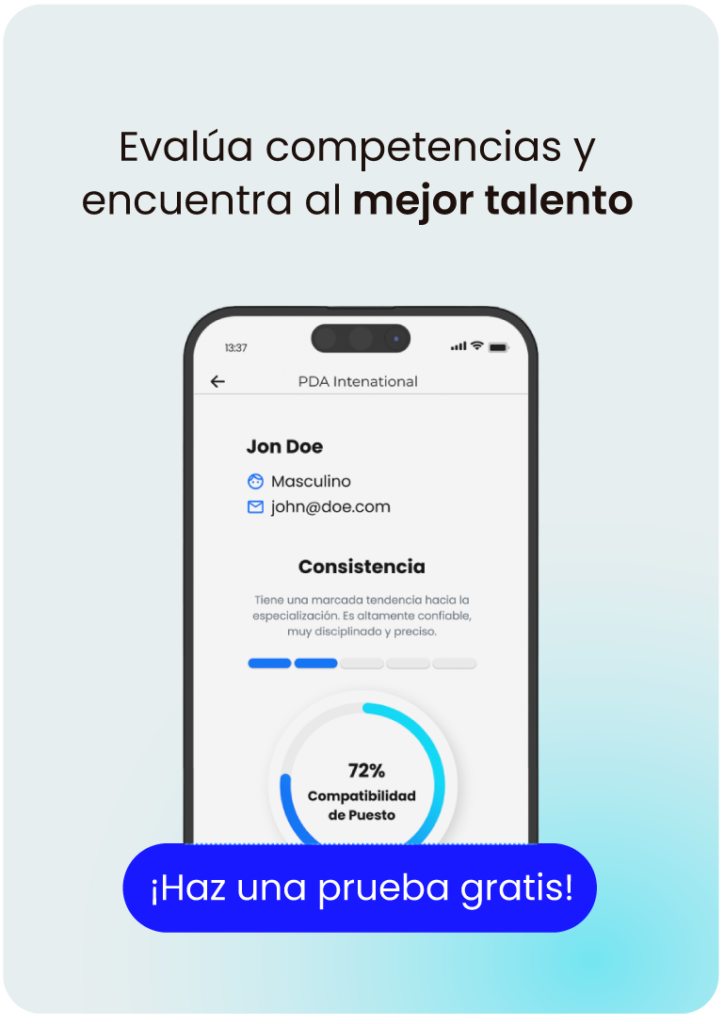
Tools such as the PDA Assessment make it possible to identify, through precise behavioral data, who is ready to take on a new role. This enables organizations to prepare well before a position becomes available, avoiding the need to look outside for talent that has always existed within the company.
How visible is the hidden potential of your employees within your current organization? What tools or methodologies does your team use to measure behavioral potential beyond technical performance? Have you faced the challenge of managers who prefer to “hold on to” their top performers instead of allowing them to grow internally? Get in Touch!