





How Universidad Abierta Interamericana strengthened its students’ power skills
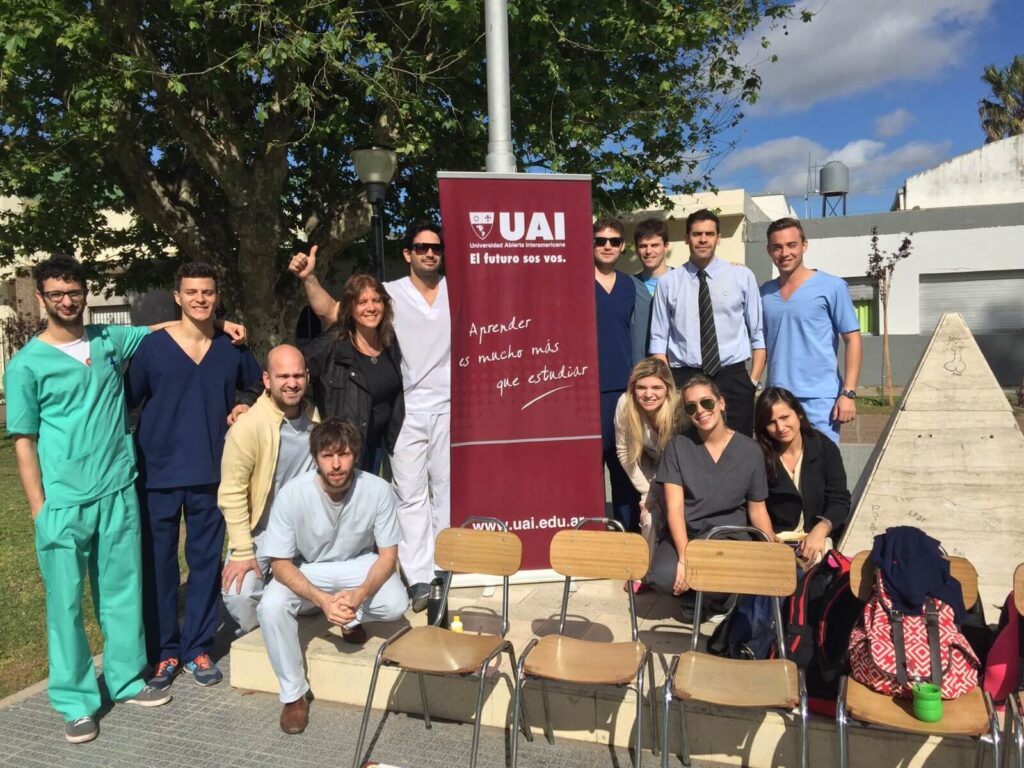
Universidad Abierta Interamericana, founded in 1995, is committed to education through an Academic Project that addresses current social, cultural, and political demands. It has 14 campuses, 10 faculties, and offers over 100 programs in Argentina.
Discover the results driven by our technology
Challenge
Helping its students identify their strengths and areas for improvement.
Solution
Implementing our behavioral assessment.
Impact
Development of power skills and alignment in course selection.
Context
The challenge of empowering our future leaders
Before implementing PDA, students faced vocational decision-making without a tool to help them identify their competencies and match them with labor market demands. This lack of clarity often led to feelings of dissatisfaction and professional disorientation.
Strategy
The key to unlocking our Students’ Potential
UAI implemented the PDA Assessment, providing students with personalized feedback to identify their behavioral competencies and understand how these relate to the expected learning outcomes in their field. This approach facilitates the identification of improvement areas and the development of effective strategies to achieve academic and professional success.
“We have applied PDA with our first-year students, and the results have been very positive. Students have expressed their gratitude to the university and PDA for the outcomes achieved. We plan to continue using the tool in the coming years, expanding its use to other courses.”
Dr. Martín Olivar, Dean of the Faculty of Economic Sciences.
“We have applied PDA with our first-year students, and the results have been very positive. Students have expressed their gratitude to the university and PDA for the outcomes achieved. We plan to continue using the tool in the coming years, expanding its use to other courses.”
Dr. Martín Olivar, Dean of the Faculty of Economic Sciences.
Want to know all the details of this transformation?
Access the full success story and discover the impact of PDA.
Drive Your Team’s Professional Growth
Our clients use PDA tools to elevate team engagement by integrating self-awareness and development solutions that identify skill gaps and accelerate individual growth.
Keep discovering stories like these

Internal Development: Why Are You Still Hiring External Talent When You Already Have It In-House?
While you’re searching for talent outside your organization, someone inside your company may already have the potential to fill that role. We’ll explain why you might not be seeing it—and how to change that.

The Missing Ingredient in Your Upskilling Strategy
How many upskilling programs end with high completion rates and low real impact? According to HRO Today, only 7% of organizations have made significant progress in strategic upskilling programs that integrate soft, technical, and digital skills. The diagnosis is clear: SHL reveals that 60% of employees don’t have a personalized development plan, and when forced to participate in generic programs, engagement is low and real progress is minimal. Something isn’t working. Is the answer in the program content? Or in the mindset each person brings to the learning experience? The Real Bottleneck What’s behind those numbers? According to PwC, fear of failure and the perception that one’s own skills will become irrelevant are two of the main barriers to active learning — and neither is solved by a better LMS. They’re solved by a mindset shift. One that’s built by understanding how each person thinks, what they fear, and what they need before they sit down to learn. From “I have to learn” to “I want to grow” The mindset shift in upskilling isn’t a preliminary step to the process: it is the process. And it has three dimensions that L&D leaders need to work on simultaneously. Psychological safety around failure: Learning means not knowing. In cultures where mistakes are penalized — even implicitly — people avoid exposing themselves. Creating contexts where getting things wrong is part of the journey isn’t philosophy: it’s a prerequisite for any development program. erceived relevance: People don’t resist learning; they resist learning something that doesn’t connect with their reality, their goals, or their professional identity. When upskilling is presented as an organizational obligation rather than a personal opportunity, commitment becomes superficial. Self-awareness as a starting point: Knowing how you learn best is just as important as knowing what you’re going to learn. Understanding one’s own behavioral profile — risk tolerance, orientation toward norms, relational style — allows each person to find their own path to development, rather than adapting to a generic format. The L&D Leader’s Role in This Shift If mindset is the knot, L&D leaders are the ones who need to untangle it before adding any new thread. That means making concrete decisions: Map beliefs before launching programs: A conversation or initial diagnostic can reveal resistance that would otherwise sabotage the process from within. Design personalized experiences, not just scalable content: Personalization isn’t a luxury — it’s what makes learning relevant to this person, at this point in their career. Involve direct managers: They have the greatest influence over the team’s learning climate and are the first ones who can turn mistakes into development opportunities. Use behavioral data: Behavioral profiles reveal information that performance reviews don’t capture — how each person learns, what level of uncertainty they tolerate, how they respond to failure. That data doesn’t replace the upskilling program; it calibrates it from the start. Mindset is the Infrastructure The most sophisticated upskilling fails when it tries to change what people know without considering how they see themselves as learners. Technology, content, and platforms are powerful tools — but they operate on ground that must first be prepared. Tools like PDA Assessment allow L&D teams to understand each employee’s behavioral profile: how they process challenges, what drives them, and what holds them back. T hat information makes upskilling programs smarter from the beginning. At the end of an upskilling program — how many employees leave with more capabilities, and how many leave with just more credited hours?

Adaptive Leadership: What Kind of Guidance Does Your Organization Need This Year?
In a workplace ecosystem that is evolving at an unprecedented pace, stability is no longer the goal; agility is. According to research by McKinsey & Company, organizations with leaders who demonstrate a high capacity for adaptability are 2.4 times more likely to outperform their competitors in terms of financial performance. At PDA, we validate this perspective: today’s competitive advantage no longer lies in the volume of resources, but in leaders’ ability to unlearn and evolve at the pace of change. As we move through this year, a key question emerges for strategic management: Are leaders prepared to navigate uncertainty, or are they still applying yesterday’s solutions to tomorrow’s problems? This is where Adaptive Leadership takes center stage. Beyond Control: The Art of Mobilizing Unlike traditional leadership, which focuses on command and technical solutions, Adaptive Leadership is about mobilizing people to tackle complex challenges and thrive. It is not about the leader having all the answers, but about creating the conditions for the team to discover them. It means shifting from being a “problem solver” to becoming an “architect of capabilities.” The 3 Capabilities That Define an Adaptive Leader Today: Mental and Behavioral Agility: The ability to pivot strategies without becoming trapped by biases or outdated methods. It is the capacity to stay focused while the landscape continues to change. Challenge Diagnosis: The ability to distinguish when a problem is technical (requiring expert knowledge) and when it is adaptive (requiring changes in the team’s beliefs, behaviors, and culture). Cultivating Self-Awareness: A leader who does not understand themselves cannot effectively guide others through transformation. Adaptive Leadership begins with recognizing one’s own behavioral tendencies and learning to manage them in ways that benefit the team. The PDA Contribution: From Data to Transformation At PDA, we believe that the starting point is always objectivity. We cannot develop what we cannot measure. Through our PDA Assessment, organizations can identify key indicators in their leaders: How does the leader respond when there is no clear roadmap?Which natural strengths can they leverage to help the team adapt?What is their decision-making style? Adaptive Leadership is, at its core, a commitment to continuous growth. At PDA, we help you identify and empower the leaders who will turn this year’s challenges into next year’s victories. Is your leadership team ready to take the next step?